Curatorial Work at the Davis Museum at Wellesley College

In Focus highlights the creative range of practices among the professional artists on the Wellesley College faculty. This exhibition features works across various media, including photography, painting, collage, sculpture, book arts, printmaking, installation, video, sound, and interdisciplinary art forms. The artists featured are Kathryn Abarbanel, Genevieve Cohn, Claudia Joskowicz, Kathya Landeros, Phyllis McGibbon, Andrew Mowbray, Daniela Rivera, Katherine Ruffin, and David Teng Olsen. As part of Wellesley’s anniversary celebrations, In Focus honors 150 years of faculty excellence at the College.
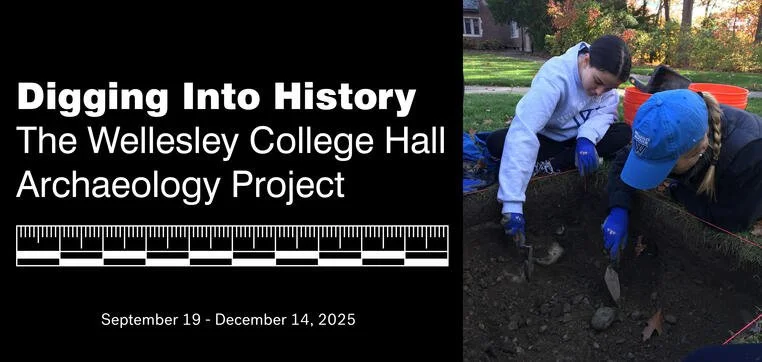
Digging Into History: The Wellesley College Hall Archaeology Project (WCHAP) explores the legacy of College Hall, the original center of Wellesley College, through a community-based excavation led by Dr. Elizabeth Minor ’03. Destroyed by fire in 1914, the building once housed classrooms, dorms, and collections, and its remains now offer a window into early campus life.
Between 2017 and 2023, over 100 students and volunteers uncovered artifacts such as ceramics, architectural fragments, and burned books, revealing everyday experiences at the College’s founding. The project highlights participatory archaeology and experiential learning while reflecting on Wellesley’s history and ongoing commitment to education and inclusion.
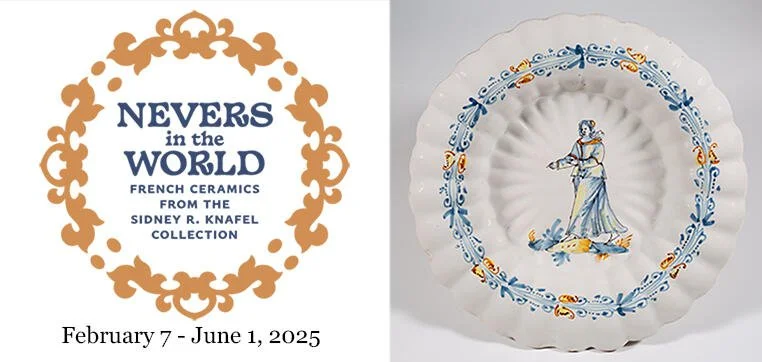
Nevers in the World presents a selection of works from the collection of Sidney R. Knafel, highlighting the history of French faience ceramics and the global exchanges that shaped their development. Faience, a tin-glazed ceramic technique first developed in eighth-century Iraq, spread across Asia and Europe, where it was adapted into regional traditions such as Italian maiolica and French faience.
In Nevers, France, the technique was transformed in the sixteenth century when artisans brought from Italian workshops introduced new approaches to pictorial storytelling on ceramic surfaces. By the seventeenth century, Nevers workshops developed a distinctive style that flourished under Louis XIV, responding in part to European demand for porcelain-inspired luxury wares. These objects reflect centuries of cross-cultural exchange and continue to reveal how materials, techniques, and visual traditions moved across regions and social worlds.
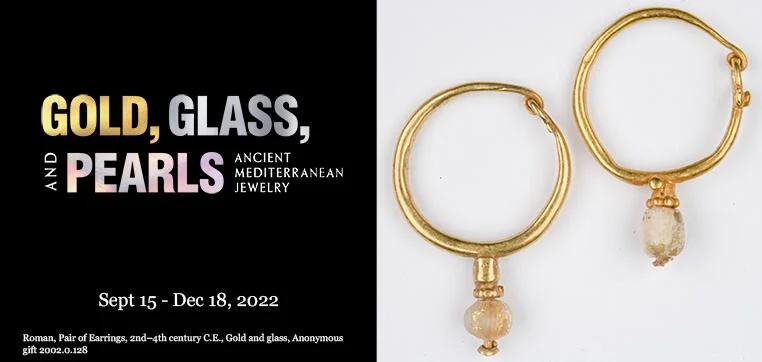
The numerous examples of jewelry that survive from the ancient Mediterranean suggest that it was an important means of self-expression for people of all social classes. Expert craftspeople transformed both modest and luxurious materials into sophisticated works of art. A single gold earring represents the complex routes of trade across long distances, the technical skill of the artisan who fashioned it, and the taste of the person who purchased it. Through a focus on craftsmanship and technology, Gold, Glass, and Pearls examines the journey from raw materials to objects of personal adornment. Overall, the Davis Museum’s collection of Greco-Roman jewelry tells the manifold stories of the people who created and wore it thousands of years ago.
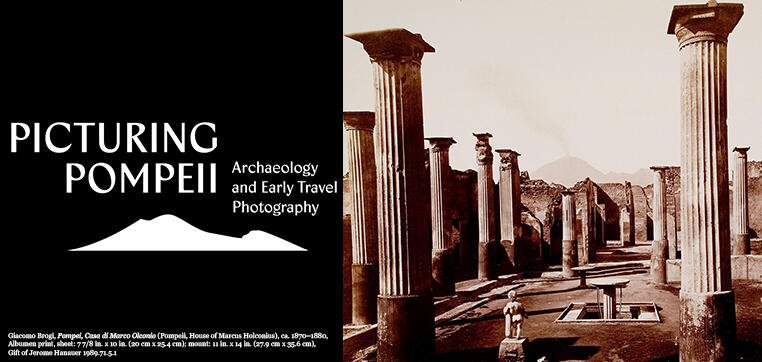
Since the first excavations of Pompeii in 1748, the ancient Roman city that Mt. Vesuvius buried in 79 C.E. has fascinated scholars and tourists alike. In the late 19th century, Italy became a prime destination for photographers, who were drawn to its Roman ruins and artworks. Photographers established large firms in tourist centers like Naples, where they sold souvenir prints and albums. In addition to serving a tourist market, nineteenth-century photographers worked closely with Italian archaeologists to document the excavations at Pompeii. This exhibition explores how, in the late 19th century, the new medium of photography played a key role in Italy’s developing tourist industry and shaped the public’s perception of Pompeii’s ancient ruins for years to come.
Curatorial Work at The Walters Art Museum
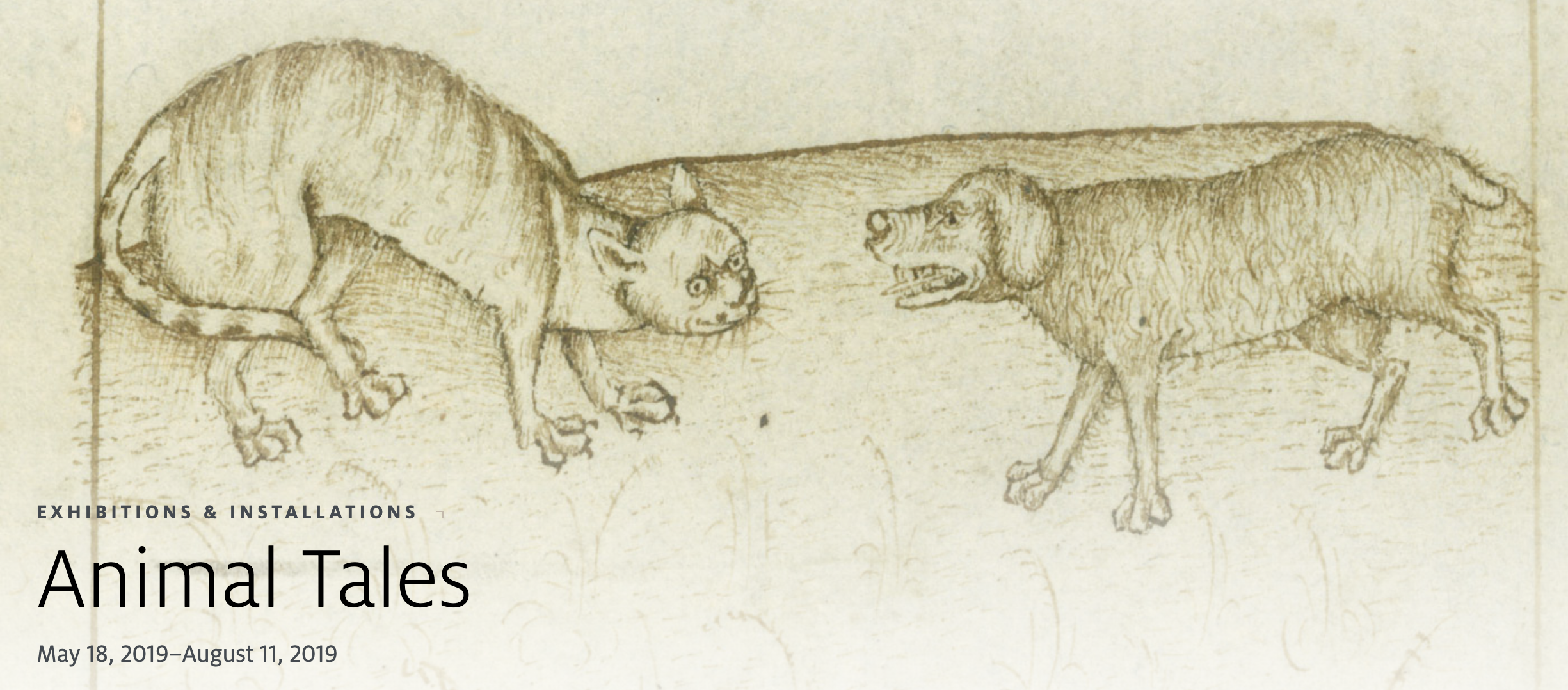
Sly foxes, ferocious lions, and slithering snakes appear throughout the pages of manuscripts in the Walters Art Museum, forming a vivid visual language of animals across centuries.
Dating from the 13th to 17th centuries, the twelve manuscripts in this exhibition show how animals functioned as more than decoration—they carried moral lessons, fables, and shared cultural knowledge. Read together, these works reveal an enduring system of visual communication that remains surprisingly familiar in today’s world of images, memes, and symbols. Animal Tales draws on the Walters’ world-renowned collection of manuscripts and rare books, spanning more than 1,000 years and encompassing over 900 manuscripts, 1,300 early printed books, and 2,000 rare later editions from across the globe.